There is a moment at some concerts when the singer stops singing.
Not because the song is over.
Because the room has taken it.
Thousands of voices carry the line.
The person who wrote it stands there listening.
I love those moments because the direction of music briefly reverses.
Artist to audience becomes audience to artist.
And the song sounds different.
Why?
Listening Together Is Already Social
Before anyone sings, a crowd is sharing attention.
Thousands of people have agreed, temporarily, that the same sound matters.
That alone is unusual.
Most daily environments pull attention in dozens of directions.
At a concert, one beat can make a whole room move.
Then people start singing.
Now the shared experience becomes physical.
Singing Requires Coordination
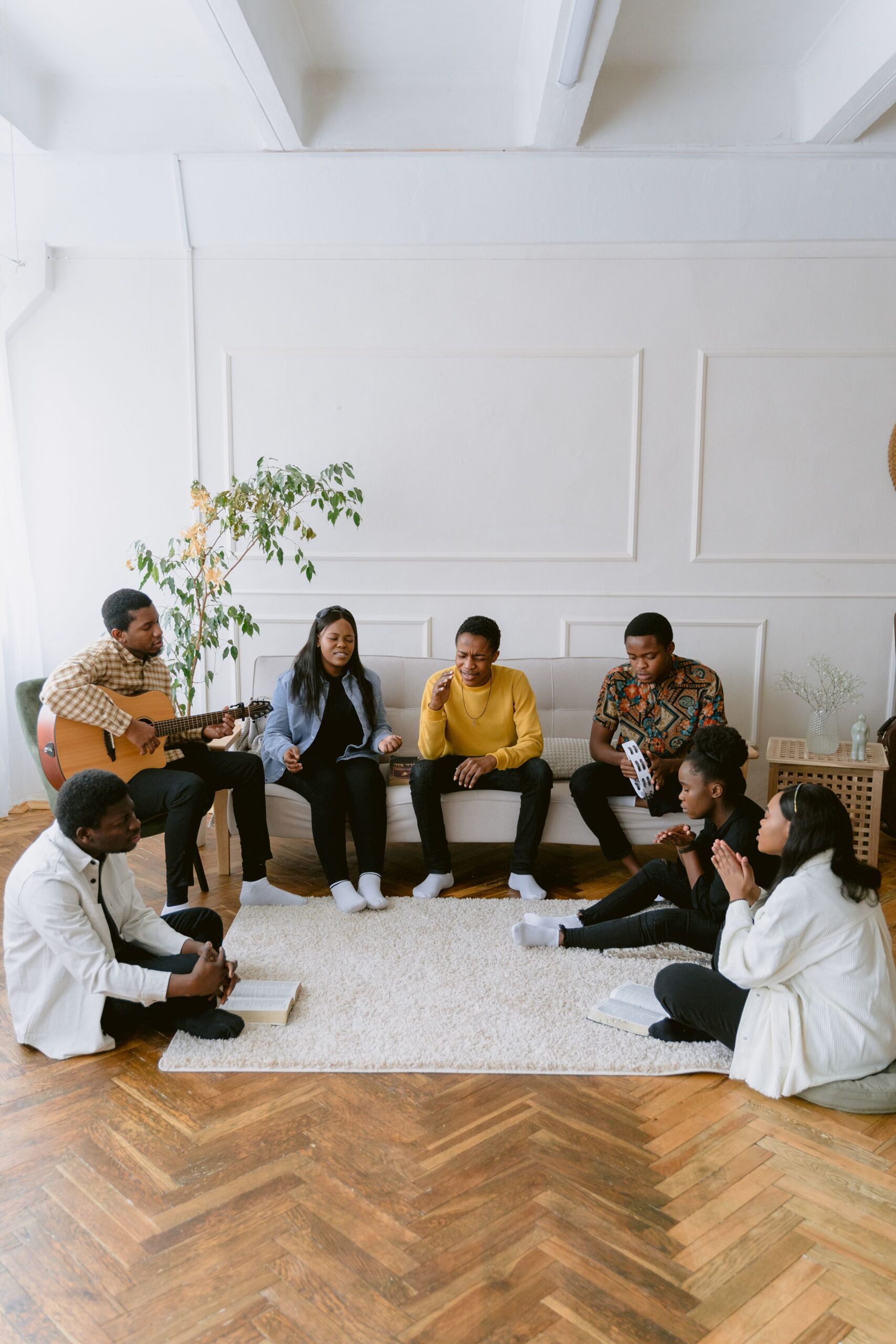
To sing with other people, even badly, you have to do things together.
Start around the same time.
Follow a pulse.
Breathe.
Hold a phrase.
Adjust to sound around you.
Maybe harmonize.
Maybe just shout the chorus.
That coordination is part of the pleasure.
You are not only receiving music.
You are participating in the production of it.
For a few seconds, the difference between audience and music-maker becomes thinner.
The Ice-Breaker Effect
One of my favourite findings in this area comes from a study comparing newly formed adult singing classes with other group activities such as crafts and creative writing.
Over time, all the groups became closer.
But the singers bonded faster.
The researchers called it an ice-breaker effect.
Singing appeared to accelerate feelings of closeness among people who did not know each other.
That makes intuitive sense if you have ever sung with strangers.
Conversation usually requires personal disclosure before closeness develops.
Singing can create a coordinated "we" before anybody knows much about anyone else.
A Temporary Us
This does not mean everyone in a choir becomes friends.
Or everyone at a concert suddenly forms community.
But coordinated music can create a temporary social identity.
For the duration of the song:
we know the words.
we know the beat.
we are waiting for the same moment.
we all know what happens when the chorus arrives.
That shared knowledge can make a crowd feel less like a collection of unrelated bodies.
It Scales
Another study looked at choir singing in both smaller groups and a "megachoir" of more than two hundred participants.
Measures of social bonding and positive affect increased after singing.
The large group showed particularly strong changes in social closeness.
That is interesting because large human groups create a social problem.
You cannot have an intimate conversation with two hundred people.
Music offers another route.
Coordination without individual intimacy.
A room can feel connected even when most people remain strangers.
Pain Threshold Is Not Proof of Endorphins
This is a good place for scientific caution.
Some singing studies use pain threshold as an indirect proxy associated with endorphin activity.
It is common to see those findings simplified into:
Singing releases endorphins.
The studies are more cautious than that headline.
We can say group singing has been associated with increases in pain-threshold measures used as a proxy in this research.
We should not pretend the researchers directly watched endorphins flood the choir.
The distinction matters.
Bodies Can Synchronize
Choir research has also found synchrony in physiological rhythms such as respiration and aspects of heart-rate variability during coordinated singing.
Again, this does not mean everyone's heart literally beats as one.
That phrase is irresistible and misleading.
Different forms of synchrony appear under different singing conditions.
Breathing is an obvious part of the mechanism.
If a group sings the same phrases, people are partly coordinating when they inhale and exhale.
That can produce shared rhythmic patterns in physiology.
The poetry is nice.
The real finding is interesting enough.
Singing Is More Physical Than It Looks
Breath.
Vibration.
Posture.
Mouth.
Chest.
Timing.
Listening.
Singing is a whole-body act.
That is true even for somebody who thinks they "cannot sing."
When a stadium audience shouts one lyric, the technical quality is not the point.
The act of doing it together is.
This is one reason recorded singalongs at home and live crowd singing are not identical experiences.
The room pushes back.
You feel other voices.
You Do Not Have to Be Good
This might be essential.
Group singing is one of those musical behaviours where skill can matter and simultaneously not matter at all.
A choir can strive for extraordinary technical precision.
A crowd can be wildly out of tune.
Both can produce intense shared experience.
The concert audience is not trying to release a record.
They are participating.
The point is not:
Did we sing that correctly?
It is:
Did we enter the song together?
Different People Can Be Singing Different Meanings
This may be the strangest part.
Ten thousand people sing the same lyric.
But the lyric may mean ten thousand things.
One person is thinking about a partner.
One about grief.
One about the friend beside them.
One about the first time they heard the song.
The words are synchronized.
The meanings are not.
A chorus creates shared behaviour without requiring identical interior experience.
That is a powerful model for what music can do socially.
The Listener's Meaning Becomes Audible
Usually listener interpretation is private.
You cannot hear what a song means to the person beside you.
Then the chorus arrives.
They scream one line.
Cry.
Stop singing at another.
Suddenly part of their relationship with the song becomes visible.
The audience is no longer an abstract mass.
It is people carrying meaning loudly.
The Crowd Can Change a Lyric
Artists talk about this all the time.
A line written privately becomes communal.
A painful lyric becomes something thousands of people yell with joy.
A quiet phrase becomes the biggest moment of the show.
The audience can transform the emotional function of the song.
This is listener meaning feeding back into performance.
The artist hears what the song became.
Not Every Crowd Is Community
We should resist romanticizing this too.
Crowds can be hostile.
Exclusionary.
Unsafe.
Lonely.
It is possible to stand among thousands of people and feel completely disconnected.
Group singing does not erase social difference.
It does not guarantee belonging.
Research on group singing is promising, but reviews repeatedly note variation in methods and limits in the evidence.
"Choirs improve mental health" is too broad.
The interesting story is more specific.
Coordinated singing can support social connection, positive affect and forms of synchrony in some contexts.
Concerts Give Us a Special Version
At a concert, group singing contains an extra relationship.
The person onstage created or performs the song.
The audience returns it.
Sometimes the artist steps back from the microphone.
That gesture says:
This part is yours now.
The room answers.
For a few seconds, authorship and listening coexist in sound.
It might be the clearest physical version of our central idea:
The artist can tell us what they made.
The listener can tell them what it became.
Why It Feels So Powerful
Synchrony is part of it, but so are participation, breath, shared attention, expectation, belonging, memory and physical sound.
Then there is the strange thrill of hearing your own voice disappear into something larger.
Science can measure pieces.
The rest belongs to what happened in the room.
Sources / Further Reading
- Pearce, E., Launay, J. & Dunbar, R. I. M. — "The ice-breaker effect: singing mediates fast social bonding"
- Weinstein, D. et al. — "Group music performance causes elevated pain thresholds and social bonding in small and large groups of singers"
- Delius, J. A. M. & Müller, V. — "Interpersonal synchrony when singing in a choir"
- Müller, V. & Lindenberger, U. — "Cardiac and respiratory patterns synchronize between persons during choir singing"
- Reagon, C. et al. — "A mixed-method systematic review to investigate the effect of group singing on health related quality of life"
- Hao, L. et al. — "The effects of group singing participation on psychological, social, and wellbeing outcomes among children, adolescents, and university students: a systematic literature review"
- Steinmacher et al. — "Music making and wellbeing: A systematic review of methods, musical activities, and outcomes"
What song have you sung with a crowd that felt completely different once everyone joined in?