There is a strange moment in music discovery when an artist suddenly becomes important.
Not artistically.
Publicly.
A song crosses some invisible threshold.
The streams get big enough.
The venue gets bigger.
The festival slot moves higher up the poster.
People start writing about them.
The algorithm becomes more confident.
Someone tells you:
You need to hear this person.
But the music existed before any of that happened.
Someone heard it when there were ten thousand streams.
Someone saw them opening a show.
Someone found a song buried near the bottom of a playlist.
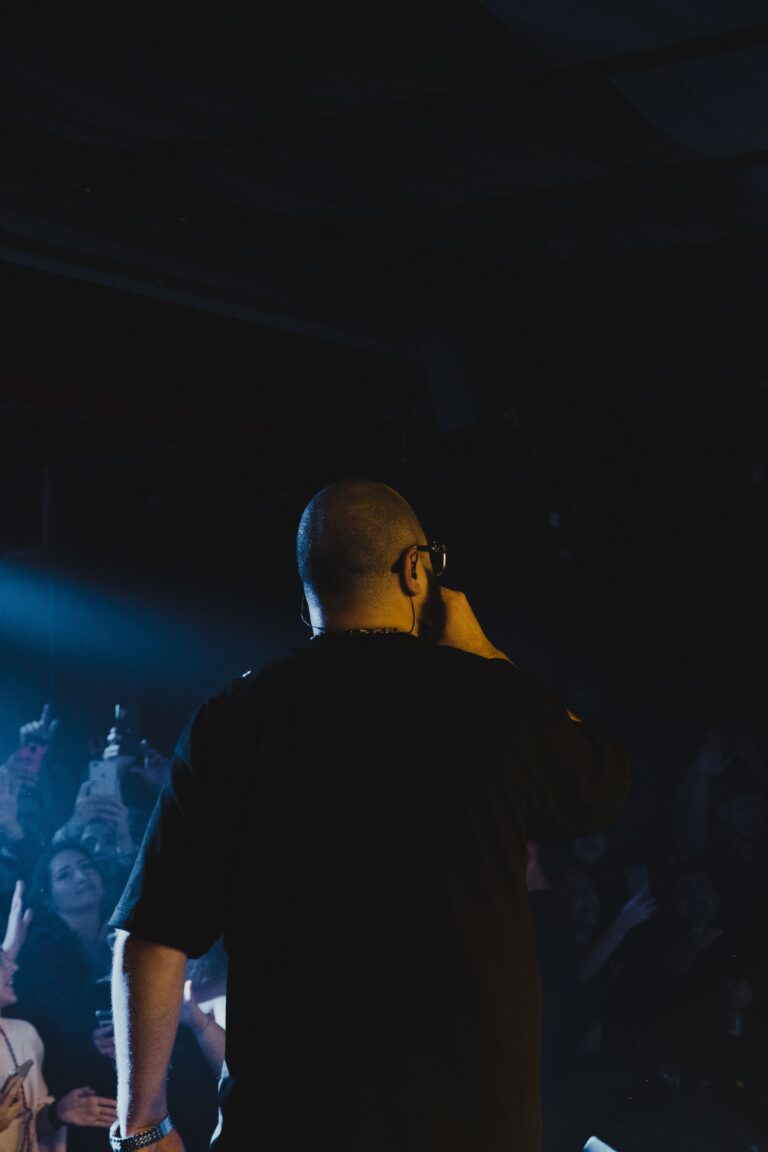
Someone walked into a tiny venue without knowing who was playing first and walked out thinking about the opener more than the headliner.
Popularity did not make the music matter.
It simply made more people notice.
That distinction is at the centre of Discovery.
Popularity Is Information
Let's get this out of the way first.
Being popular is not a criticism.
I do not want Discovery to become a competition in obscurity.
There is no prize for knowing an artist before everybody else.
And music does not become less meaningful because millions of people love it.
Sometimes millions of people love something because it is extraordinary.
Sometimes a song becoming enormous is one of the most interesting things about it.
Mainstream music belongs here.
Unknown music belongs here.
Everything in between belongs here.
Popularity is information.
It tells us something has connected.
What it does not tell us is whether we will connect with it.
Those are different questions.
Numbers Are Useful Shortcuts
I understand why we use them.
There is more music available than any person could possibly hear.
So we need filters.
Charts.
Playlists.
Festival posters.
Follower counts.
Reviews.
Recommendations.
Algorithms.
Friends.
Radio.
Social media.
All of them help narrow an impossible amount of music into something manageable.
The problem begins when the shortcut becomes the judgment.
A million streams becomes evidence that something deserves attention.
Five thousand becomes evidence that it does not.
That makes no sense.
Those numbers may tell us how far the music has travelled.
They tell us very little about what will happen when it reaches one particular listener.
Discovery Is an Attention Problem
I do not think the biggest problem with finding new music is that there is not enough good music.
There is too much.
The problem is attention.
How long do we give something before moving on?
Do we listen to the artist with 4,000 monthly listeners as carefully as the person whose face is already everywhere?
Do we stay for the opening act?
Do we click the unfamiliar name?
Do we go past the first song?
Do we revisit something that did not immediately work?
Discovery is partly the decision to give something enough attention that it has a chance to matter.
Sometimes thirty seconds is enough.
Sometimes a song takes months.
We have already established that a first listen is a moment, not necessarily a verdict.
Discovery needs to remember that too.
The Best Discovery Moment Is Not “I Found Them First”
That idea has always bothered me.
Music is not a stock you bought before the price went up.
Discovering an artist early does not make you more entitled to them.
You do not get ownership because you were there when the venue was smaller.
And newer listeners are not less legitimate because they arrived through a hit song.
The interesting part is not:
I knew them before you did.
It is:
I heard something and wanted somebody else to hear it too.
That feels like a healthier instinct.
Discovery should be generous.
Not territorial.
Sometimes Twenty-Five People Are Enough
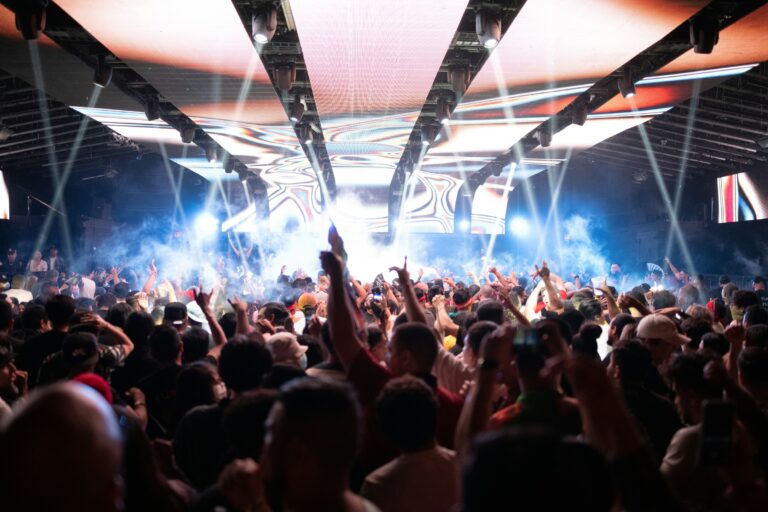
A tiny room can tell you things a streaming number cannot.
There is nowhere for the performance to disappear.
You can see whether the artist can hold attention.
Whether the words land.
Whether the band believes what they are playing.
Whether something happens in the room.
Maybe the person onstage has barely released anything.
Maybe nobody around you knows the songs.
It does not matter.
For thirty minutes, the only useful question is:
Do I believe this person?
This is where Discovery and Music With Stakes meet.
Conviction does not require scale.
A performance in front of twenty-five people can contain as much emotional force as something happening in front of twenty-five thousand.
The size of the audience changes the experience.
It does not automatically change the value of what is happening.
Opening Acts Matter
I want us to pay particular attention to opening acts.
There is something unusually honest about that encounter.
Most of the room did not buy the ticket for them.
People are talking.
Getting drinks.
Finding their seats.
Waiting for somebody else.
The artist has to create attention where very little was guaranteed.
Then occasionally something happens.
Conversation stops.
Phones come out — not because everybody already knows the song, but because they suddenly want to know who is singing it.
People start searching the artist before the set is over.
That is discovery happening without much mediation.
No star rating.
No streaming count.
No recommendation engine explaining why you are supposed to like it.
Just:
Listen to this.
Local Does Not Mean Lesser
There is another shortcut I want us to avoid.
The assumption that geography is a hierarchy.
A local band is not a preliminary version of a “real” band.
An artist from Vancouver, Melbourne, Lagos, Glasgow, Manila or a town you have never heard of does not become more legitimate once somebody in London, Los Angeles or New York writes about them.
Scenes matter because people make music where they are.
Venues matter.
Community radio matters.
Small publications matter.
Independent labels matter.
People telling their friends matter.
Music can become globally important.
But it always begins somewhere.
For us, being rooted in British Columbia should give us a place to stand.
It should not give us a border.
Rooted here. Curious everywhere.
Discovery Does Not Have to Mean New
This has become increasingly obvious as we have built everything else.
Didirri performing “Vincent” can make a listener finally hear a Don McLean song that had existed for decades.
A television series can give a thirty-year-old recording another life.
A cover can send somebody backward into the original.
A reissue can expose a record to people who missed it.
A song can wait quietly for twenty years until somebody uses it in exactly the right scene.
Discovery does not mean:
released this Friday.
It means:
new to the listener.
That is a much bigger world.
The Algorithm Is Not the Enemy
Algorithms are remarkably good at finding patterns.
They have introduced people to music they genuinely love.
Mine certainly does not need to be treated like some villain standing between me and authentic listening.
But recommendation systems work from information.
What you have played.
What other people played.
What tends to follow what.
What is already generating signals.
Human curiosity can do something different.
It can choose the thing with very little evidence.
The strange opener.
The song somebody sent with no explanation.
The artist on a tiny label.
The track that does not resemble what you have been listening to lately.
The recommendation that makes no statistical sense.
Both systems can coexist.
What I do not want is for our musical world to become a perfect reflection of what we already know we like.
Discovery should occasionally get the prediction wrong in an interesting way.
Genre Can Become Another Shortcut
Genres are useful.
They help us communicate.
They help artists find audiences.
They help us find scenes.
But:
If you like X, you'll like Y
can become a very narrow way to encounter music.
Maybe I do not need something that sounds like the thing I already love.
Maybe I need something that creates the same feeling through completely different musical language.
That is one reason our discovery should follow emotional response as much as genre.
Did something stop us?
Did we believe it?
Did it make us curious?
Did we immediately want to play another song?
Did it change once we saw it live?
Did we come back the next day?
Those questions tell us more than:
Which genre box should this go in?
We Do Not Need to Cover Everything
This is important editorially.
Discovery becomes meaningless if it turns into an inbox.
There will always be more submissions.
More releases.
More artists.
More publicists.
More playlists.
More recommendations.
We cannot — and should not — publish everything we encounter.
The goal is not volume.
It is attention.
I would rather tell you about five things we genuinely care about than fifty things we barely heard.
That means passing on good music sometimes.
It means listening without immediately publishing.
It means keeping artists on a watch list.
It means returning later.
It means admitting:
I do not know yet.
That is allowed.
Sometimes “Not Yet” Is the Right Answer
A song can catch your attention without convincing you completely.
Maybe something about the voice stays with you.
The writing is interesting but the production does not land.
The live clip feels stronger than the recording.
One track is extraordinary and the others are not there yet.
You do not have to turn every interesting encounter into a verdict.
Watch.
Listen again.
See what happens next.
Discovery should have room for curiosity without premature certainty.
That is partly why our internal process should not simply be:
YES / NO.
There can be:
PASS
WATCH
PLAYLIST
DISCOVERY FEATURE
MUSIC WITH STAKES
PRIORITY
Those are not status symbols.
They are ways of asking what kind of attention the music deserves from us right now.
The Question Is Not “Will They Be Big?”
This is probably the most important rule.
We are not A&R.
We are not trying to predict the market.
An artist does not need to become famous later in order for covering them now to have been worthwhile.
If we write about someone because the music moved us and their career remains small, the story did not fail.
That idea would recreate the exact hierarchy we are trying to avoid.
The question is not:
Will everybody care about this in six months?
It is:
Is there something here worth paying attention to now?
Maybe the audience catches up.
Maybe it does not.
The music still happened.
We Should Explain Why
Discovery writing can become incredibly empty.
One to watch.
Rising star.
Future sensation.
Get them on your radar.
Okay.
Why?
What did you hear?
What makes this artist different from the fifty other people described using exactly the same words this week?
Our discovery pieces need to answer that.
Maybe it is the writing.
The voice.
One production choice.
An unusual perspective.
The live performance.
A chorus that will not leave.
Something imperfect but compelling.
A sense that the artist is reaching toward something we want to hear develop.
Do not tell me somebody is exciting.
Show me where the excitement is.
A Playlist Can Be Discovery. It Cannot Be the Whole Story.
We will have discovery playlists.
They matter.
Sometimes the most useful thing we can do is simply place a song in front of somebody and get out of the way.
But when a track really stops us, I want to tell you why.
WHY IT'S HERE.
That is becoming an important phrase across the publication.
Not because every song needs a thousand-word essay.
A few sentences can be enough.
But curation should contain an argument.
This is not:
Here are 50 new songs because Friday happened again.
It is:
These are the ones we want you to hear. Here is what made us stop.
Discovery Should Be Global Without Becoming Tourism
If we are going to be curious everywhere, we need to do it properly.
Music outside the places we already understand should not be treated as novelty.
We should not approach artists from another country as though their location is automatically the most interesting thing about them.
Sometimes context matters enormously.
Language.
Scene.
Politics.
Culture.
Tradition.
Community.
Sometimes what matters most is simply that the song is incredible.
The artist should get to be an artist first.
Curiosity requires learning, not exoticizing.
And when we do not understand something, we should do the work.
Let Other People Find Things for Us
We cannot build a meaningful discovery section by pretending one editor can hear everything.
Listeners should send us music.
Artists should send us music.
Photographers.
Venue workers.
Promoters.
DJs.
Writers.
Other musicians.
Someone who saw an opener last night and cannot stop thinking about them.
Someone who heard a track on college radio.
Someone halfway around the world who knows their local scene infinitely better than we ever will.
The audience is not the endpoint here either.
They are part of the listening network.
Our job is not to prove that we already knew.
Our job is to pay attention when someone says:
You need to hear this.
But Submission Does Not Guarantee Coverage
That generosity has to coexist with honesty.
Sending us music cannot mean automatic publication.
Paying us cannot mean coverage.
Being persistent cannot mean coverage.
Knowing somebody cannot mean coverage.
If something is sponsored, that needs to be clear.
Editorial attention has to remain editorial attention.
Otherwise Discovery stops being useful.
The reader has to trust that when we say:
Listen to this,
we mean it.
Sometimes We Will Be Late
Good.
Being early is not the objective.
Hearing well is.
There will be artists we miss until everybody else finds them.
There will be albums we discover two years after release.
There will be songs sitting right in front of us that somebody else has to point out.
The point is not to win a race.
The point is to remain curious enough to change our minds.
If popularity brings something extraordinary to our attention, we should listen.
Again:
this is not anti-popularity.
It is anti-assumption.
Sometimes We Will Be Early
And when that happens, I want us to remember what our role is.
Not:
We discovered them.
We did not.
The artist existed before our article.
They made the song.
Played the rooms.
Built the work.
Maybe hundreds of people already cared deeply.
Our role is simpler:
We heard something worth sharing.
That is enough.
Music Worth Hearing
This section should contain:
new releases
emerging artists
opening acts
local scenes
international scenes
songs sent by readers
songs found by accident
artists who have been working for years without breaking through
older music newly discovered
records rediscovered through covers, film or television
music whose numbers are enormous
music whose numbers barely exist
because popularity should never be the qualifying question.
The qualifying questions are:
DID SOMETHING HAPPEN WHEN WE LISTENED?
DO WE WANT TO HEAR IT AGAIN?
IS THERE SOMETHING HERE WORTH EXPLORING?
CAN WE TELL YOU WHY?
And maybe, above all:
WOULD WE STILL CARE ABOUT THIS IF WE COULDN'T SEE THE NUMBERS?
That is the test.
Because somewhere tonight, somebody is playing an extraordinary song to a room of twenty-five people.
Somewhere else, somebody is releasing something nobody's algorithm knows what to do with yet.
A listener is discovering an old record.
A friend is sending a link.
An opening act is changing somebody's night.
A song is waiting.
Popularity may eventually tell us it matters.
I would rather listen first.
What is one artist or song you think more people should hear — and what made you stop when you first heard it?
What is one artist or song you think more people should hear — and what made you stop when you first heard it?
Submission-form framing:
Don't just send us the link. Tell us what you heard.
Was it the voice? The writing? A live performance? One strange production choice? The fact that you immediately needed another song?