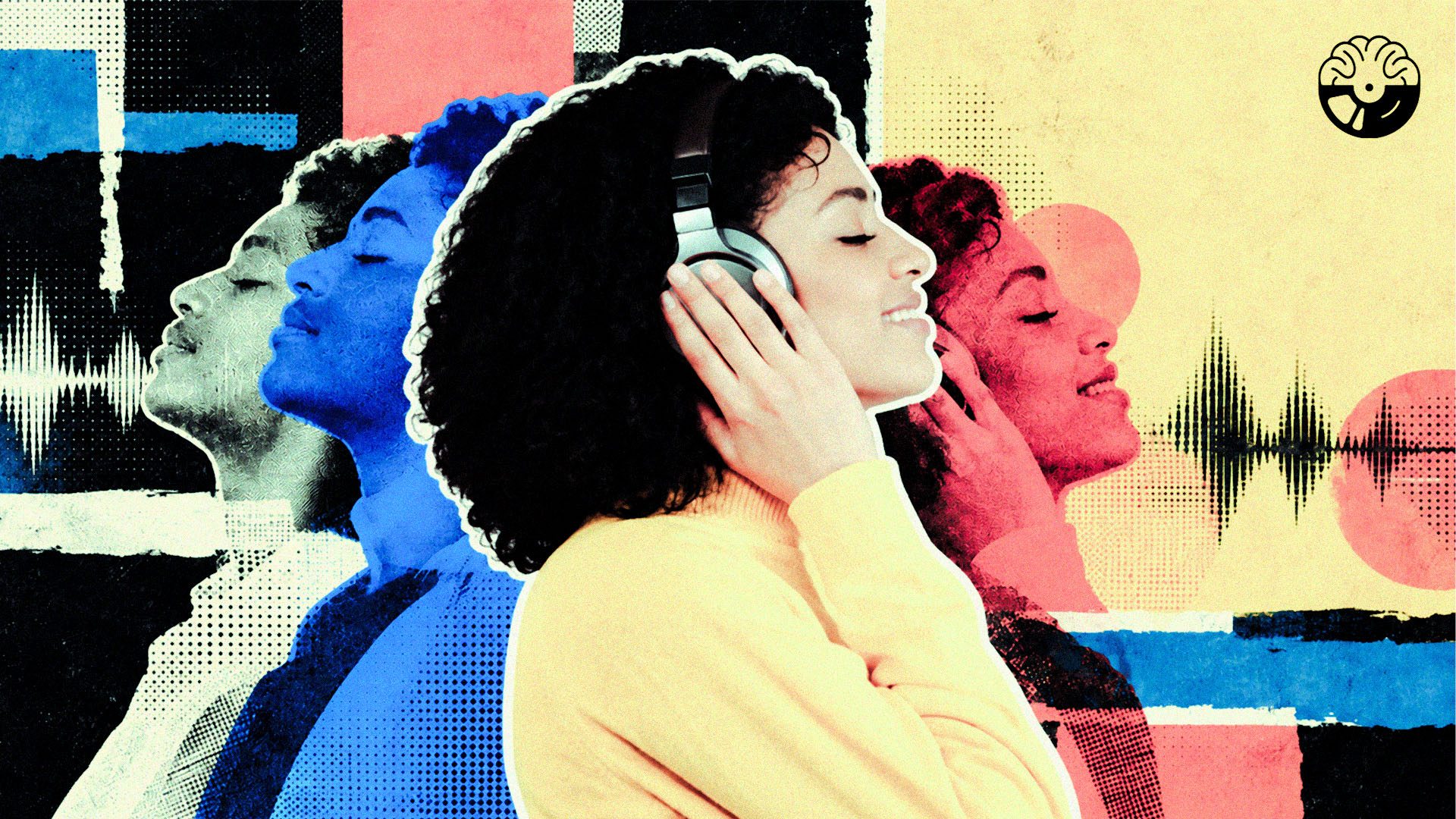
A song can change the emotional temperature of a room before we have consciously decided anything about it.
A beat enters.
A voice appears.
A chord does something we expected — or refuses to.
Our shoulders move.
Our attention narrows.
A memory arrives.
Something we were already feeling becomes clearer.
Something we were not feeling five minutes earlier suddenly is.
Music can do all of that.
The interesting question is not whether music and emotion are connected.
They obviously are.
The question is:
How?
Perceived Emotion Is Not the Same as Felt Emotion
Start with an important distinction.
Music can sound sad without making us sad.
It can sound threatening while we enjoy it.
It can sound joyous when we are not feeling joyful at all.
Researchers distinguish between perceived emotion — what emotion we think the music expresses — and felt emotion — what we actually experience while listening.
Those two things often overlap.
They do not have to.
That helps explain why a heartbreaking song can feel comforting, or why ominous music in a film can be enjoyable even while it creates tension.
We are not emotional photocopiers.
The music expresses something.
We respond.
The response depends on more than the signal itself.
There Is No Single "Music Emotion" Button
One of the most useful ideas in music psychology is that emotion can be produced through several mechanisms at once.
Patrik Juslin and Daniel Västfjäll described routes including emotional contagion, episodic memory, imagery, musical expectancy and learned associations.
That already makes the simple headline:
Music releases happy chemicals
look hopelessly inadequate.
A song can affect us because its vocal expression resembles human emotion.
Because it reminds us of a person.
Because the rhythm changes our bodily state.
Because we know the chorus is coming.
Because we do not know where the melody is going.
Because a sound has become attached to another experience.
Because we love the song.
Because somebody beside us does.
The mechanisms overlap.
That is why music can feel so immediate and so personal at the same time.
We Are Constantly Predicting What Comes Next
Listening is not passive.
The brain is making predictions.
Where will the beat fall?
Will the chord resolve?
Is the melody about to return home?
Will the drop happen now?
Music gives us patterns, teaches us those patterns, then plays with them.
A 2022 review in Nature Reviews Neuroscience describes prediction as fundamental to music perception, action, emotion and learning.
That is a useful way to think about tension in music.
Expectation can be fulfilled.
Delayed.
Violated.
Repeated until the repetition itself becomes pleasurable.
The emotional experience is partly in the relationship between what happens and what we thought might happen.
Familiarity Changes Expectation
A first listen and a fiftieth listen are different physical and cognitive experiences.
On the first, we are discovering the map.
Later, we know where the bridge is.
We know the drum fill before it arrives.
We know exactly how long the silence lasts before the final chorus.
That does not necessarily make the experience weaker.
Anticipation itself can become part of the pleasure.
This is one reason a favourite song can still work even when surprise is gone.
The surprise may be replaced by expectation.
And expectation can be intensely rewarding.
Reward Is More Complicated Than "Dopamine"
Music neuroscience gets flattened quickly online.
A study mentions dopamine.
A headline becomes:
Your favourite song gives your brain dopamine.
Then dopamine becomes shorthand for pleasure, happiness, addiction and almost anything else somebody wants to explain.
The actual research is more interesting.
In a well-known 2011 study, Valorie Salimpoor and colleagues found dopamine release associated with both anticipation and peak emotional response to music, involving different parts of the striatum.
That does not mean every song causes the same chemical event in every listener.
It does show that abstract patterns of sound can engage reward systems in ways that help explain why musical anticipation and emotional peaks can feel genuinely powerful.
The build matters.
The arrival matters.
Sometimes the waiting is part of the pleasure.
The Body Is Listening Too
Music does not stop at interpretation.
Rhythm invites movement.
Tempo can change the way we breathe or move.
Loudness creates physical force.
Low frequencies can be felt as much as heard.
A voice can contain audible strain, breath, closeness, distance.
Even listening without moving visibly can involve motor systems.
This is part of why "I know it is only sound" is not a very useful description.
Sound is physical.
Hearing is embodied.
Music is entering a nervous system, not floating past a detached brain.
The Voice Is a Human Signal
A sung voice carries information that words alone do not.
Breath.
Tension.
Roughness.
Control.
Volume.
Pitch movement.
Timing.
A singer can communicate distress while singing words that look neutral on a page.
They can sound emotionally distant while singing something devastating.
That is one reason conviction is not reducible to lyrics.
We are hearing a person make the sound.
Or, at minimum, hearing the traces of a person making the sound.
Production can bring that person close enough to feel almost inside the room.
Or deliberately push them far away.
Memory Can Arrive Faster Than Analysis
Sometimes the emotion has almost nothing to do with the composition as an abstract object.
The song is sad because of who is inside it.
Or joyful.
Or unbearable.
Music can cue autobiographical memory with remarkable vividness.
That means our response to a song may be partly a response to a previous version of our own life.
A chord progression does not "contain" your university apartment.
But if enough listening happened there, the association can become powerful.
Music is capable of carrying emotional context forward through time.
We Bring Individual Differences With Us
Not everybody responds to the same music in the same way.
Obvious, but worth saying because science headlines sometimes imply universality where the studies do not.
Preference matters.
Familiarity matters.
Personality can matter.
Musical training can matter.
Culture matters.
Expectation is partly learned.
The same dissonance, rhythm or timbre can carry different meanings in different musical systems.
A song that soothes one person can irritate another.
A song that helps one listener regulate a feeling can intensify another person's rumination.
There is no scientifically correct playlist for "feeling better."
Sometimes We Want to Change the Feeling
This is what most mood playlists assume.
We feel low.
We want lift.
We feel overstimulated.
We want calm.
We feel distracted.
We want focus.
Music becomes a tool for moving from one state toward another.
Research on music and emotion regulation supports the idea that people deliberately use music this way.
But that is only one kind of regulation.
Sometimes We Want to Stay With the Feeling
If we are sad, we may choose sad music.
If we are angry, we may choose something that sounds angrier.
That can look irrational if the only emotional goal is:
Become happy as quickly as possible.
But people have other goals.
Understand the feeling.
Express it.
Feel accompanied.
Give it somewhere to go.
Remember.
Cry.
Think.
Turn chaos into something with structure.
"Feeling better" and "feeling happier" are not synonyms.
Sometimes regulation means moving through a feeling rather than replacing it.
Preference Changes the Effect
This seems almost embarrassingly obvious and is still important.
Research comparing musical preference and familiarity suggests preference can influence subjective and physiological emotional responses.
The same "calming" piece selected by a researcher may not calm a listener who hates it.
Your favourite aggressive song may be regulating in a way an externally selected ambient track is not.
This is why Music Is Mood should never pretend to prescribe.
A playlist is an editorial suggestion.
Not a treatment protocol.
Context Is Part of the Music Experience
Headphones at midnight.
A grocery store.
A funeral.
A stadium.
A film scene.
A workout.
A first date.
A hospital room.
The recording may be the same.
The emotional event is not.
Social context is particularly important.
A chorus sung alone can feel private.
The same chorus sung by twenty thousand people can feel communal and enormous.
We should be cautious about attributing everything we experience at a concert to the acoustic properties of the song.
The room is doing work too.
Science Does Not Remove the Magic
I understand the worry.
If we explain something, do we make it smaller?
If a song gives you chills and a neuroscientist identifies some of the systems involved, has the moment been reduced to circuitry?
I do not think so.
Knowing that light involves wavelengths does not make a sunset disappointing.
Knowing something about autobiographical memory does not make the song that brings somebody back less meaningful.
Science can describe mechanisms.
It cannot replace the lived experience of what those mechanisms are carrying.
Music Can Change How We Feel
Sometimes through prediction or memory; sometimes through bodily rhythm, reward or the expressive qualities of a voice. A song can also let us recognize something we could not name.
Usually more than one of those things is happening at once.
And sometimes the most important variable is impossible to hear in the recording.
It is the person listening.
Sources / Further Reading
- Kallinen, K. & Ravaja, N. — "Emotion perceived and emotion felt: Same and different"
- Juslin, P. N. & Västfjäll, D. — "Emotional responses to music: the need to consider underlying mechanisms"
- Vuust, P. et al. — "Music in the brain"
- Koelsch, S. — "Brain correlates of music-evoked emotions"
- Salimpoor, V. N. et al. — "Anatomically distinct dopamine release during anticipation and experience of peak emotion to music"
- Peters, V. et al. — "The impact of musicking on emotion regulation: A systematic review and meta-analysis"
- Ferreri et al. — "Musical preference but not familiarity influences subjective ratings and psychophysiological correlates of music-induced emotions"
- McCrary, J. M. et al. — "Association of Music Interventions With Health-Related Quality of Life: A Systematic Review and Meta-analysis"
- Gustavson, D. E. et al. — "Mental health and music engagement: review, framework, and guidelines for future studies"
What song can change your emotional state almost immediately — and what do you think is doing the work?