A cover can be technically perfect and still leave the song exactly where it was.
Same melody.
Same words.
Different voice.
Nothing really changed.
Then somebody else sings it and the song seems to move.
The tempo changes.
The arrangement disappears.
A lyric you barely noticed becomes the centre of the performance.
Something loud becomes fragile.
Something polished becomes dangerous.
Something familiar becomes unfamiliar enough that you finally listen.
Those are the covers I am interested in.
Not simply:
Is this version better than the original?
That question can be fun, but it is usually too small.
The better question is:
What happened to the song when this person got hold of it?
That is Made Their Own.
A Cover Is an Interpretation
Cover versions are sometimes talked about as if there is an original object and then a series of increasingly unnecessary copies.
But songs have never really worked like that.
A composition can survive dozens of performers precisely because performance is part of meaning.
Change the singer and you change the body carrying the words.
Change the instrumentation and you change the emotional architecture around them.
Change the tempo and a line can suddenly have room to hurt.
Change the genre and the same lyric can begin speaking to a completely different audience.
Change the setting — studio to stage, arena to tiny room, electric to acoustic — and the listener may respond as though they are hearing a different song.
The words can stay exactly where they are.
Everything around them moves.
“Nothing Compares 2 U” Has Lived Several Lives
Few songs demonstrate this better than “Nothing Compares 2 U.”
Prince wrote it and recorded his own studio version in 1984, although that recording would remain unreleased for decades. The first version the public actually received was recorded for The Family, the Prince-created group that released the song on its 1985 album.
Then Sinéad O'Connor sang it.
And for huge numbers of listeners, the song became hers.
That does not erase Prince.
It demonstrates what performance can do.
O'Connor's recording reduced the distance between the listener and the song. The arrangement gave her voice enormous space. The performance made the words feel exposed rather than decorated.
The song became a worldwide number-one hit.
It became so culturally identified with O'Connor that plenty of listeners encountered the composition through her without ever knowing another version existed.
Then the song moved again.
Chris Cornell performed a stripped-back live interpretation that put yet another voice inside it.
His version does not sound like O'Connor trying to sing Prince.
It sounds like Chris Cornell finding the part of the song that belonged inside his own instrument.
Three extraordinary artists can stand around the same composition and reveal different emotional shapes inside it.
That is more interesting to me than declaring a winner.
Prince wrote the song.
Sinéad O'Connor changed its cultural life.
Chris Cornell changed the way another group of listeners could hear it again.
A song can survive all three truths.
Prince — “Nothing Compares 2 U”
Chris Cornell — “Nothing Compares 2 U”
The Way a Cover Is Played Can Change the Response Completely
Sometimes the transformation is not primarily about who is singing.
It is about how the song is being played.
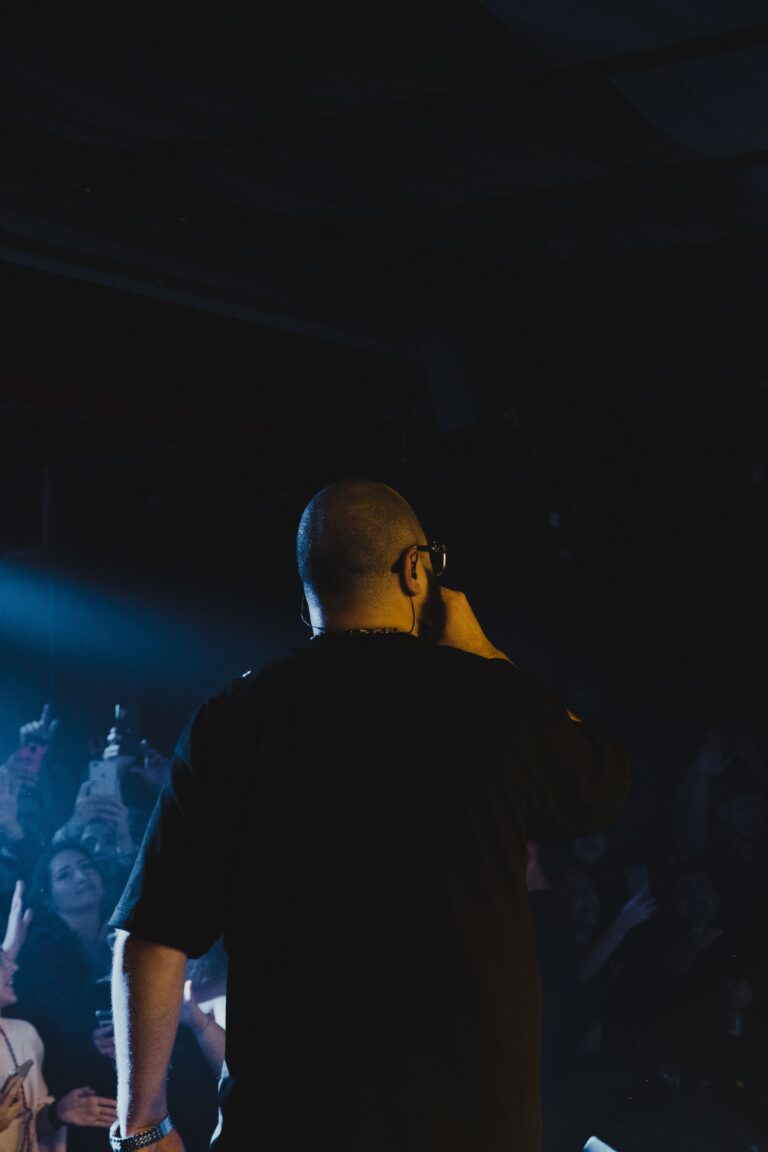
I was lucky enough to see Didirri perform in a very small room in Kelowna, British Columbia, with only about twenty-five other people there.
There happened to be an old upright piano on the stage that the venue had recently had tuned.
In an impromptu moment, Didirri decided to use it and played a haunting version of Don McLean's “Vincent.”
I knew the song in the loosest possible sense.
It sounded vaguely familiar.
I knew Don McLean, obviously, but mostly through “American Pie.” I was not a Don McLean fan or aficionado, and I had never developed any real relationship with “Vincent.”
That changed in the room.
The piano mattered.
The size of the audience mattered.
The fact that the performance appeared to happen because that instrument happened to be sitting there mattered.
The song suddenly felt intimate and ghostly in a way I had never registered before.
Afterwards I went back and properly discovered “Vincent.”
Not Don McLean as an artist.
That song.
A cover had given me a new doorway into music that had been sitting within reach for years.
That is another thing a cover can do.
It can send us backwards.
Discovery Does Not Always Move Toward Something New
Music discovery is usually framed as a hunt for the next release.
New artist.
New single.
New album.
But a cover can make a fifty-year-old song new to the listener.
You hear Jeff Buckley's “Hallelujah” and eventually find Leonard Cohen.
You hear Johnny Cash sing “Hurt” and discover the Nine Inch Nails recording from an entirely different emotional direction.
You hear Michael Andrews and Gary Jules turn “Mad World” into something sparse enough for Donnie Darko and suddenly Tears for Fears sounds different too.
You hear Nerina Pallot strip “Love Will Tear Us Apart” down and the Joy Division composition reveals another shape.
The cover is not necessarily the destination.
Sometimes it is the bridge.
A Familiar Song Can Become Unfamiliar Enough to Hear Again
This may be one of the best things a cover can achieve.
Familiarity is useful.
It is also dangerous.
Songs we know extremely well can become almost invisible.
The opening starts and our brain knows where everything is going.
We sing the line before it arrives.
We remember the production instead of actively hearing it.
Then a different artist removes the thing we thought was essential.
Pearl Jam have repeatedly performed Bob Dylan's “Masters of War,” with Eddie Vedder and Mike McCready also creating particularly stark versions of it.
The composition is already severe.
But change the voice, guitar tone and historical moment around it and the words can acquire a different urgency.
The song did not need fixing.
The new performance gives us another position from which to encounter it.
That distinction matters.
The Best Covers Do Not Apologize for Existing
There is a kind of cover that feels frightened of the original.
Every phrase is preserved.
Every arrangement choice is honoured.
The performer seems determined to prove respect by changing almost nothing.
Sometimes that is exactly what a performance needs.
But the covers that stay with me tend to take a bigger risk.
Aretha Franklin did not treat Otis Redding's “Respect” as a museum object.
Jimi Hendrix did not approach Bob Dylan's “All Along the Watchtower” as something too sacred to rearrange.
Whitney Houston's “I Will Always Love You” does not sound like Dolly Parton with a different singer.
Johnny Cash's “Hurt” does not try to reproduce Trent Reznor's emotional world.
Each performance respects the composition enough to actually interpret it.
That can mean changing almost everything except what matters.
Sometimes Conviction Matters More Than Ownership
This is where Made Their Own meets Music With Stakes.
One of the questions underneath that section is:
Do we believe them?
A cover makes that question particularly interesting because we already know the words are not literally theirs.
They did not write them.
They may not have lived the circumstances that produced them.
And yet the performance can still feel completely inhabited.
This is why I do not want to use authenticity as shorthand for autobiography.
A singer does not need to have personally experienced every line in order to perform it with conviction.
Acting exists.
Empathy exists.
Interpretation exists.
Musical intelligence exists.
A great performer can enter somebody else's song without pretending to own somebody else's life.
The question becomes:
Did they find a truthful way to carry it?
Nothing But Thieves and the Power of Restraint
Nothing But Thieves covering Jeff Buckley's “Lover, You Should've Come Over” is interesting partly because Conor Mason has the technical ability to turn the performance into a vocal showcase.
That would be the easy temptation.
Instead, the song works when the performance serves the ache already inside the composition.
The vocal capability is there.
But capability is not the point.
Restraint can be an interpretation too.
Sometimes what an artist chooses not to do is what lets the song survive the encounter.
A Cover Can Change Scale
Some songs move from small to enormous.
Others become more powerful when somebody makes them smaller.
A full band becomes one piano.
A wall of guitars becomes an acoustic instrument.
A studio arrangement becomes a voice in a room.
A pop song becomes orchestral.
An electronic track becomes something human hands seem to be physically pulling apart.
Scale changes our relationship with a lyric.
In a huge arrangement, a line can feel communal.
In a tiny one, it can feel like somebody said it directly to you.
Neither is automatically better.
They are different emotional propositions.
Live Covers Have an Extra Variable
A studio cover has time to decide what it is.
A live cover can feel like an event.
The room knows the original.
Or maybe it does not.
Recognition ripples through the audience.
An artist can introduce the song with a story.
A piano happens to be onstage.
A guest appears.
The crowd realizes what is happening halfway through the first line.
Now the cover carries the circumstances of that particular night.
This is where Made Their Own and Live Is Therapy deliberately overlap.
A version can matter because of the interpretation.
It can matter because of the room.
Often it is both.
Covers Can Give Songs New Audiences
There is sometimes a defensive reaction when a cover becomes more famous than the original.
People say:
They know the cover but they don't even know who wrote it.
Fair enough. Credit matters.
Songwriters matter.
History matters.
But I also think there is something extraordinary about a composition surviving long enough to be continually rediscovered.
Sinéad O'Connor did not erase Prince by taking “Nothing Compares 2 U” to a gigantic audience.
Her recording became one of the reasons millions of people know the composition exists.
Gary Jules and Michael Andrews did not diminish Tears for Fears by giving “Mad World” another emotional identity.
A cover can widen the life of a song.
And a curious listener can always travel backwards.
That movement is part of the pleasure.
Original or Cover?
We will probably argue about this sometimes.
Good.
There are songs where I prefer the original.
Songs where I prefer the cover.
Songs where the versions do such different things that ranking them feels pointless.
That last category may be the most interesting.
Because if two performances can make the same composition feel meaningfully different, we have learned something about what performance actually contributes to a song.
The recording is not merely a delivery system for the writing.
The voice matters.
Arrangement matters.
Production matters.
Context matters.
The room matters.
Conviction matters.
When the Cover Leaves Evidence
A cover does not become interesting just because somebody sang the song well. The versions worth carrying forward are the ones that leave evidence of the encounter.
Maybe the arrangement changes the emotional centre. Maybe the performer finds conviction in words they did not write. Maybe the version sends a listener backwards to an original they had never properly heard.
Sometimes that shift reaches an entire generation. Sometimes it reaches twenty-five people in a tiny room. Both count.
Sources / Further Reading
- Prince Official Discography — “Nothing Compares 2 U”
- Prince Official Discography — The Family (1985)
- Sound On Sound — “Classic Tracks: Sinéad O’Connor ‘Nothing Compares 2 U’”
- Michael Andrews — Donnie Darko (Original Motion Picture Score)
- RTÉ — Nerina Pallot on the renewed response to “Love Will Tear Us Apart” through Normal People
What cover made you hear a song differently — or sent you back to an original you had never properly heard before?
Secondary prompt: Which song has versions you refuse to rank because they do completely different things?