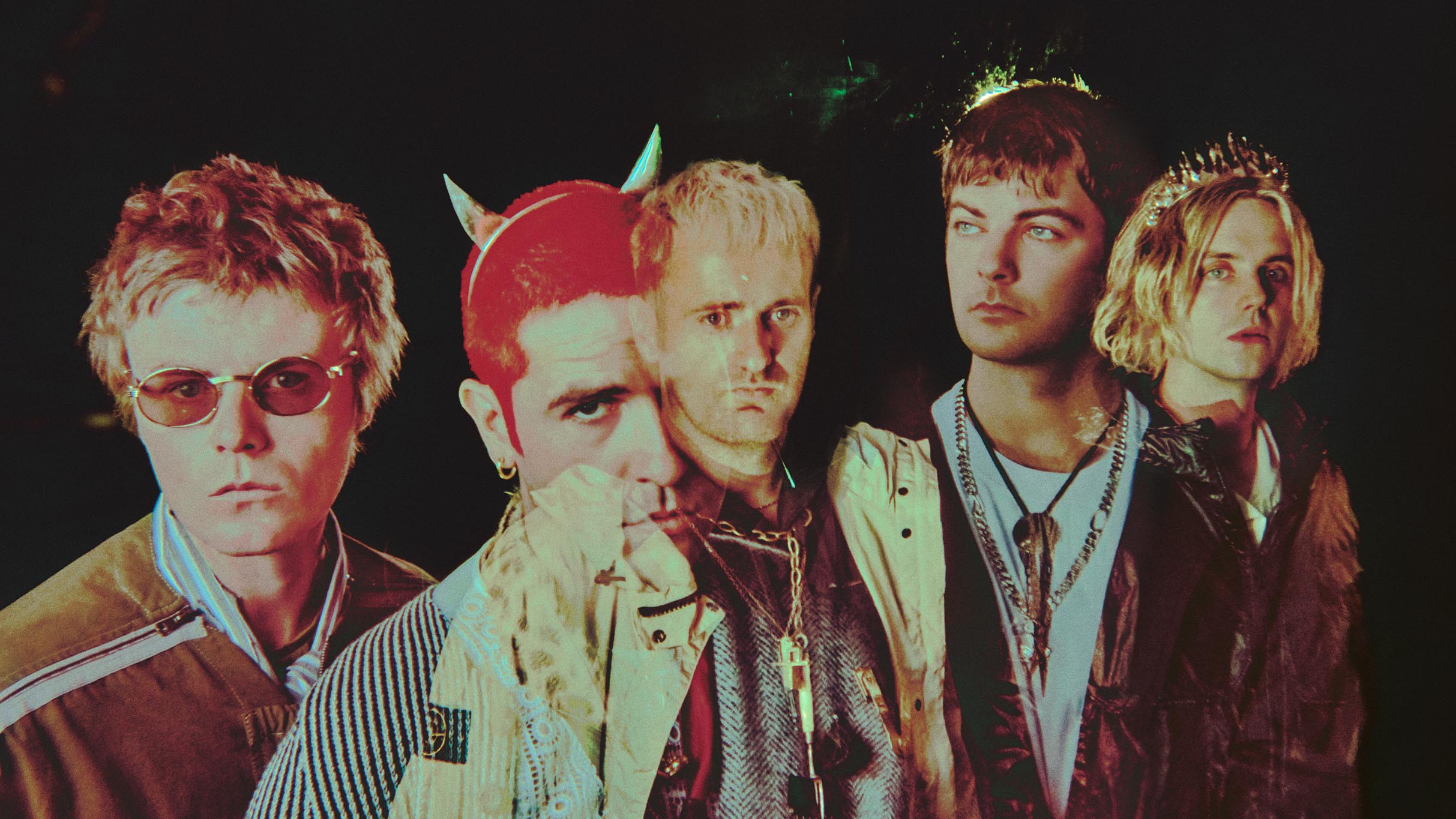
It’s been four or five days since Fontaines D.C. released Dopamine Chamber, and I’ve spent a lot of that time with it. Listening through from beginning to end, returning to individual songs, reconsidering what I thought I heard, and trying to make sense of how the whole thing makes me feel.
One of the things I keep coming back to is just how cinematic this album is. Not simply in how individual songs sound, but in how the entire record comes together. The music moves from one scene to another, creating images in my head, almost like I’m watching a film unfold without ever being told exactly what the story is.
And every time I reach the closing refrains of “Intimate,” I find myself picturing the same scene.
Think of those extravagant parties in The Great Gatsby. Beautiful people in beautiful rooms, surrounded by everything we’re told should make us happy. The kind of places people spend their lives hoping to be invited into.
Everyone looks like they’re having an incredible time. They’re dressed for it, smiling, drinking, moving from one conversation to another. From the outside, these are people who appear to have everything. Every sign of a life that’s full.
But there’s something strangely empty about it.
It’s almost as though everyone is playing a part. They know how to look happy, how to appear successful, how to present the version of themselves they want the world to see. They’re surrounded by people, yet nobody seems to be genuinely connecting with anyone.
Everything about their lives suggests fulfilment, but underneath the surface, there’s this overwhelming sense of emptiness.
And I can’t help wondering how much of that exists in our own lives. How often are we presenting the appearance of happiness or connection without actually experiencing it? How often are we surrounded by people without allowing ourselves to be truly known?
I certainly don’t think I’m immune to any of it.
That’s the image I’ve been left with after spending these past few days with Dopamine Chamber. An album that, beneath some of the most exhilarating music I’ve heard this year, seems to be filled with people searching for connection, acceptance and some sense of who they really are.
And the strange thing is, for all the loneliness and disconnection I hear in these songs, I haven’t felt this alive listening to an album in a long time.
The band that got under my skin
My relationship with Fontaines D.C. didn’t begin with an immediate connection.
A few years ago, I was driving to an Arctic Monkeys concert in Vancouver with my eldest daughter. Fontaines were opening, so I put on Skinty Fia to get to know them.
It didn’t immediately grab me… Then I saw them live.
Something about that performance completely changed the way I heard the band. The intensity, the energy, and Grian Chatten’s almost magnetic presence onstage.
I went back to Skinty Fia and couldn’t stop listening. Then came Dogrel, A Hero’s Death, and Grian’s solo album, Chaos for the Fly.
By the time Romance arrived in 2024, they had become one of my favourite bands.
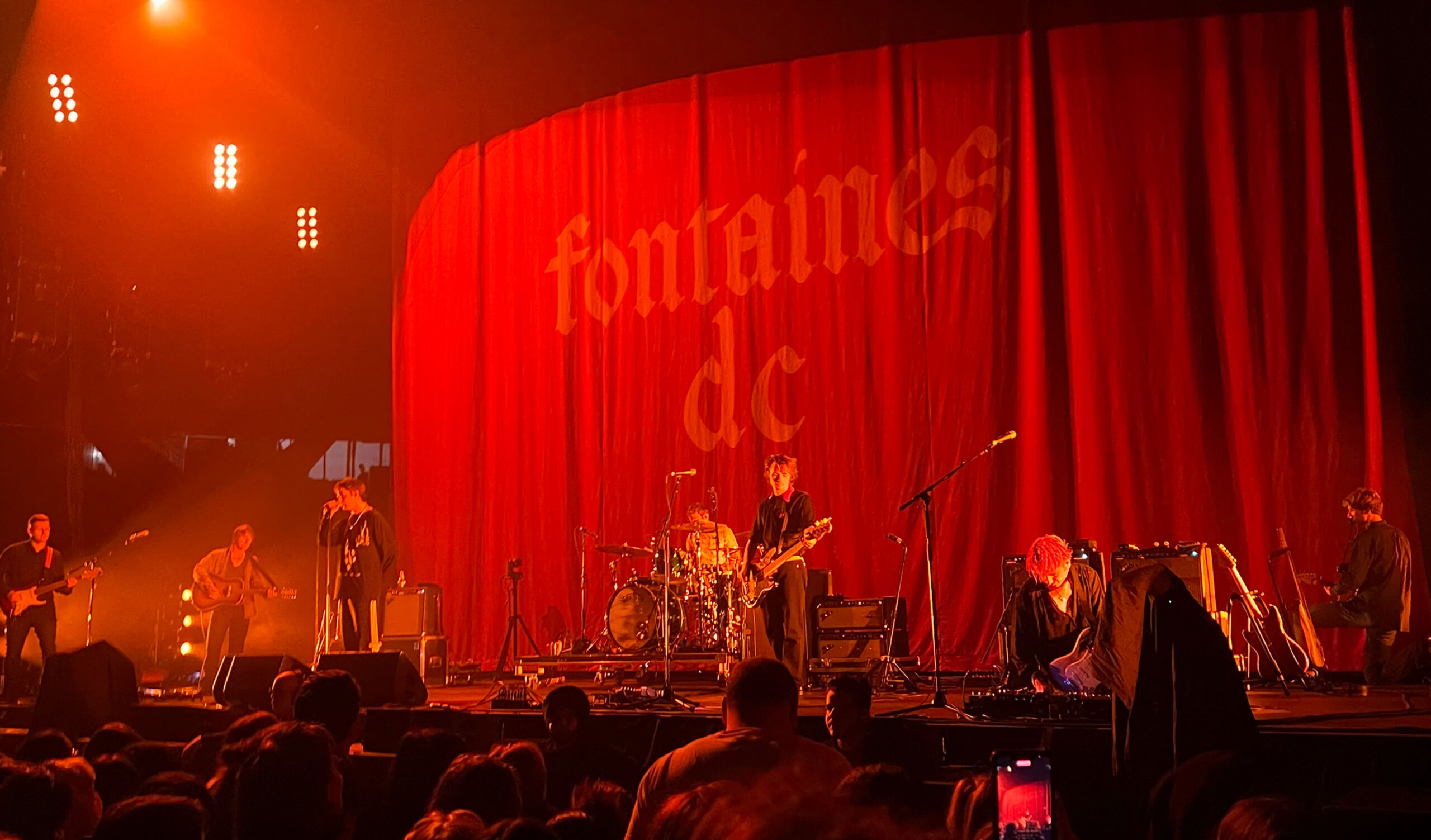
I saw them again at Vancouver’s Commodore Ballroom in 2025. I went alone that night, and it ended up being my favourite concert of the year.
There’s something about Grian’s voice I find difficult to explain. I’ve compared him to Liam Gallagher before, not because they sound alike, but because both have voices that feel inseparable from their bands.
There’s a vulnerability, an intensity and something that sounds remarkably honest in his delivery. Even when I don’t entirely understand the words, I believe the emotion I’m hearing.
So I approached Dopamine Chamber excited, but cautious. When a band means this much to you, you worry about building expectations that the next record might not meet.
I certainly wasn’t prepared for where this one would take me.
Six shots on a beautiful morning
The first twenty-five seconds of “Six Shot Morning” genuinely threw me.
There’s a strange, hypnotic electronic pulse. It sounds almost like something a band might play before walking onstage. I could picture the lights going down and the musicians appearing through the darkness.
I honestly wondered whether it was just an introduction.
Then Grian’s voice enters.
That unmistakable drawl, distant and echoing through the music.
Suddenly the whole thing starts taking shape. It builds and builds, gathering intensity until what initially seemed like an unusual opening piece becomes this enormous, unsettling crescendo.
But it’s the opening line that really stays with me.
“Six shot morning, it’s a beautiful world.”
What an interesting way to introduce an album.
There’s something threatening about those first words, immediately followed by this declaration that the world is beautiful. And the music seems to exist somewhere between those two feelings.
It’s hypnotic and strangely beautiful, but there’s something sinister underneath.
Then, after all that building tension, it falls away into a handful of notes that lead almost effortlessly into “Marianne.”
I already knew “Marianne.” Its unsettling bassline and irresistible chorus had grabbed me from the first listen.
But hearing it immediately after “Six Shot Morning” changes the experience. It’s almost as though the first track has opened the door to this strange new world, and “Marianne” is where we begin exploring it.
There’s longing in the song, a promise of escape, but even that escape doesn’t feel entirely reassuring.
On my first listen, I didn’t know what to make of “Six Shot Morning.” Now I can’t imagine the album beginning any other way.
I probably wouldn’t choose it to introduce somebody to Fontaines D.C. But as the opening to Dopamine Chamber, I think it’s extraordinary.
It introduces something that seems to run through the entire record: a beautiful world with something deeply unsettling happening beneath the surface.
Dancing through the darkness
There’s something wonderfully cinematic about the sound Fontaines have created.
At times, I think about the neon-lit atmosphere of Drive. Elsewhere, I hear shades of Depeche Mode in the pulsing synths and darkly seductive rhythms.
And then there’s “Mimesis.”
What a fucking song.
The electronic beat makes me want to move. I picture a dark, sweaty nightclub, flashing lights cutting through the room, bodies moving as the music becomes almost physical.
It’s sexy, infectious and exhilarating.
But underneath that energy, I hear somebody trying to break through another person’s disillusionment. A kind of defiance, or perhaps an invitation to escape.
It’s a strange contrast. Music that makes me want to dance while carrying something considerably darker underneath.
And Fontaines keep playing with that contrast.
The shift into “Happy For You” is almost a hard stop. Suddenly we’re inside something much more melancholy.
I hear somebody trying to convince themselves they’ve accepted the end of a relationship, even though the sadness in Grian’s delivery suggests otherwise.
Then “Demolition” brings the energy surging back.
It’s another song I can’t wait to hear live, yet beneath that excitement I hear someone struggling with what happens when another person has become so essential to their sense of self that they don’t know who they are without them.
Those songs don’t necessarily tell the same story. But hearing them together makes the emotional connections difficult for me to ignore.
The fight within ourselves
“Tongue” was another song that took me a few listens to really connect with.
There’s something disorienting about its electronic textures and the manipulation of Grian’s voice.
It makes me think about words. The things we say, the things people say to us, and how those words can continue living inside our heads long after the conversation is over.
I’m an overthinker. I can replay conversations, worry about what I said or wonder whether somebody meant something different from what I initially understood.
Sometimes we end up having entire conversations with ourselves that the other person doesn’t even know are happening.
And then comes “One Man.”
I think this might be my favourite song on the album.
It starts quietly, almost like an acoustic ballad, before the guitars open into something surprisingly anthemic. There’s a quality to it that reminds me, loosely, of the feeling of Oasis’s “Wonderwall.” I really don’t know why.
But Grian sounds so incredibly sad.
Even as the music becomes brighter, his voice seems to carry this enormous internal struggle.
I hear somebody who doesn’t believe they’re good enough. Somebody desperately trying to live up to another person’s expectations.
But the more I listen, the more I wonder whether those expectations are even real.
What if nobody is actually asking them to change?
What if the harshest judgment is coming from within?
You can spend so long worrying about not being enough that eventually you become both the person being judged and the person doing the judging.
And there’s no obvious way out of that.
I don’t hear “One Man” as somebody overcoming their insecurity.
I hear somebody acknowledging it.
Something in that sadness, and the way Grian gives it a voice, connected with me immediately.
Two people alone with the same memory
“Where Is Gone?”, featuring Rosalía, is one of the most unexpected moments on the record.
I would never have imagined pairing her with Grian Chatten. Their voices are so different, yet they work beautifully together.
Musically, there’s something almost James Bond-like about it. Sweeping, cinematic and full of melancholy.
Grian begins low, his voice almost weary. Then Rosalía enters with this gorgeous higher register.
And despite that enormous contrast, they seem to be expressing the same sadness.
For some reason, the song creates a particularly vivid image in my head.
I picture two people sitting alone in separate rooms, perhaps on opposite sides of the world.
Both remembering the same relationship. Both wondering what might have been different. Both carrying the loss, without necessarily knowing what the other person is feeling.
There are moments in the lyrics that could suggest a conversation. But I’ve never quite heard it that way.
To me, they’re not singing to each other. They’re each having a conversation with themselves.
Two separate internal monologues forming a shared lament.
There’s something heartbreaking about that possibility. Two people can share the same grief, understand why a relationship ended, and still have no idea what the other person is experiencing.
I don’t know whether that’s what the band intended with this duet. But it’s what I see when I hear it.
And I find it incredibly moving.
All these ways to connect
After that sweeping sadness, “You Miss Me” brings the energy back. But it also makes me think about another kind of disconnection.
The things we reach for when we don’t feel comfortable within ourselves.
Relationships. Substances. Attention. Validation. Technology. Anything that might offer a little reassurance that we’re wanted or that everything is okay.
My mind goes to the phone in our pockets. The endless opportunities for little moments of satisfaction, and the carefully selected fragments of our lives we share with the world.
But I don’t think the album is simply criticizing technology. That feels too narrow.
What interests me is the possibility that we can become dependent on things that make us feel connected without requiring us to genuinely connect.
We’re surrounded by ways to communicate, but are we actually talking to one another?
That question keeps coming back as I listen.
“Japan” complicates it in a way I hadn’t initially considered.
Musically, it’s one of the brighter songs on the album. But lyrically, the more I’ve listened, the less certain I am about what’s happening.
Initially, I imagined a narrator who was in love with a woman trapped in an unhappy relationship.
Then I started questioning that.
Do we know he’s in love with her? Do we know how much he actually understands about her life?
And I keep coming back to his question about why she had to make things real.
What if this woman was providing an escape for him, too?
What if he enjoyed whatever connection existed between them because he didn’t have to confront the complications of their actual lives?
Then suddenly those complications became impossible to ignore. And perhaps he could no longer pretend his involvement was harmless.
I’m genuinely not sure that’s what the song means. But going back through the lyrics changed how I heard it.
And I find that fascinating.
Because wanting the feeling of intimacy and actually being willing to know another person aren’t necessarily the same thing.
The whole album changes the songs
One of the things Dopamine Chamber has reminded me is why I wish more people would listen to albums from beginning to end.
I love discovering individual songs. There’s something wonderful about hearing a track for the first time and immediately wanting to play it again.
And not every song needs to belong to a larger story.
But an album can offer something different.
A song can mean one thing when you hear it on its own, and something else entirely when you hear what comes before and after it.
That’s what’s happened to me here.
“Six Shot Morning,” which initially seemed like an extended introduction, now feels essential. The melancholy of “Happy For You” changes the way “Demolition” hits me. “One Man” makes the grief I hear in “Where Is Gone?” feel even more affecting.
And then “Intimate” brings me back to that imagined party at the end of the world.
I don’t think these eleven songs tell one continuous story.
But I hear a strong thematic connection between them, even when the music moves in dramatically different directions.
People struggling with identity. With self-worth. With dependency. With the need to be wanted, understood or loved.
And the more I’ve listened, the more I’ve found myself questioning some of my initial interpretations.
“Japan” is probably the clearest example. I began with one understanding of the song, then went back through the lyrics and found myself considering something entirely different.
But none of that changed my fundamental response to the album. I loved it from the beginning.
The deeper listening has simply given me more to think about.
The band creates the songs, their arrangements and the world they inhabit. We bring our own experiences into that world. What we hear might be completely different from what somebody else hears.
And sometimes it changes every time we return.
Where is the optimism?
There’s still one thing I haven’t quite figured out.
On earlier Fontaines records, I often heard anger and frustration, but underneath it I sensed conviction. Some belief that things could get better.
Even Romance, despite its darkness, left me feeling there was optimism somewhere inside it.
Dopamine Chamber is different.
Musically, it’s vibrant, adventurous, sometimes incredibly uplifting. It makes me want to dance, sing and lose myself completely.
But emotionally, I find it much harder to locate that same hope.
I hear people searching for something that might make them feel whole, while sometimes becoming more disconnected in the process.
And then the album ends with “Intimate.”
That extraordinary imagined party. Everyone surrounded by people. Everyone outwardly having a wonderful time. And perhaps nobody really knowing anyone.
I don’t know whether the album offers a way out.
Maybe the desire for genuine connection is itself something worth holding on to.
Or perhaps I’m trying to find reassurance in music that isn’t particularly interested in providing it.
I’m still not sure.
What I do know is that I’ve rarely felt so alive listening to music that makes me think about such deeply sad things.
And I don’t need to resolve that contradiction to love the album.
What does it do to you?
I don’t want to tell you this album is a masterpiece, or that these songs mean exactly what I think they mean. That’s not really the point.
I love this record. There’s genuinely nothing on it I want to skip. Even the songs that took a few listens to connect have become essential to the experience.
But that’s my relationship with it. Yours might be entirely different.
Maybe you’ve loved Fontaines D.C. for years. Maybe you’ve never connected with their music. Maybe you’ve never heard them at all.
I’d encourage you to listen to the whole record.
Start with “Six Shot Morning.” Let it build. Follow it into “Marianne.” Experience the changes in energy, the quieter moments, the songs that make you want to move and the ones that make you stop and think.
Stay with it until “Intimate.”
Then go back to whichever song stayed with you. Listen to it on its own.
Does it feel the same? Does it mean something different without the songs surrounding it?
And when you return to the album, do you hear something you missed before?
I started listening to Dopamine Chamber because Fontaines D.C. are a band I love.
I keep listening because it continues to make me feel things I’m still trying to understand.
Maybe some of those questions will eventually make more sense. Maybe they won’t.
Either way, I can’t wait to hear these songs again.
What does Dopamine Chamber make you feel?