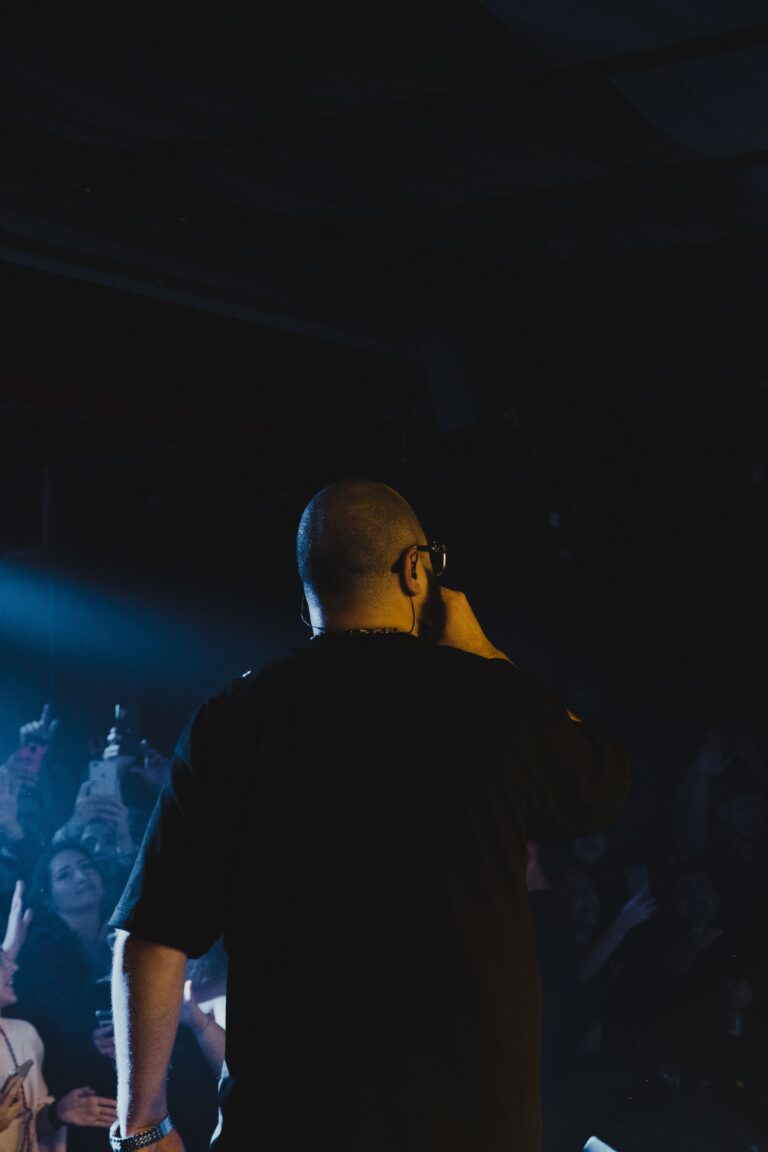
There are singers who can do things with their voices I will never understand.
Range, control, pitch, power, technique.
Then there are performances where none of those words are the first thing that comes to mind.
The reaction is simpler.
I believe this person.
That feeling interests me more.
Not because technique does not matter.
It can matter enormously.
But because technical excellence and emotional conviction are not the same thing.
A flawless vocal can leave me completely untouched.
A cracked one can stop me in my tracks.
So what are we actually hearing when that happens?
Conviction Is Not Confession
The first mistake would be to assume conviction means autobiography.
It does not.
An artist does not need to have literally lived every lyric.
Actors can make us believe fictional people.
Novelists can make us grieve invented lives.
A songwriter can inhabit a perspective, construct a character, exaggerate, combine memories or write something that is simply not about them.
The test cannot be:
Did this really happen?
The better question is:
Do they make the emotional world of the song feel real while we are inside it?
That is different.
Sadness Is Not Depth
The second mistake is easier.
Sad song = serious song.
Quiet song = vulnerable song.
Trauma = authenticity.
None of those equations hold.
Joy, desire, rage and humour can all have stakes.
A dance record can contain as much conviction as a piano ballad.
And sadness performed without specificity can feel as empty as anything else.
Pain does not automatically create good art.
The subject may be heavy.
The performance still has to do something with it.
Perfection Is Not the Goal
There is a strange tendency to treat imperfection as evidence of truth.
The voice cracks, therefore it must be real.
The recording is rough, therefore it must be authentic.
The artist is obscure, therefore they must be uncompromised.
That is just another shortcut.
A rough recording can be affected.
A polished recording can be devastating.
A technically brilliant singer can sound completely present.
A bedroom demo can feel emotionally distant.
Conviction is not a production style.
It is the result of choices.
The Singer Is Not Doing This Alone
This matters.
We often talk about emotionally powerful songs as though the singer generated the entire experience by force of personality.
Listen more closely.
The producer may have decided not to add another layer.
The engineer may have kept the breath before a line.
The mixer may have pushed the voice uncomfortably close.
The drummer may hold back until one moment matters more.
The guitarist may play almost nothing.
The arranger may remove the obvious chord.
The band may surge in exactly the place the singer cannot.
Or the production may deliberately create distance because distance is what the song needs.
Conviction can be amplified, protected, framed and sometimes polished away.
When a recording feels emotionally inevitable, there are usually many people responsible.
Five Things I Keep Hearing
I've tried to work out what I am actually hearing when that feeling happens.
I keep coming back to five things.
They are not a formula.
They are clues.
Specificity
Specificity does not have to mean literal detail.
It means the song seems to know what it is talking about.
A particular image.
A strange phrase.
A melodic decision that could only belong there.
A performance choice that feels responsive to the line rather than generically emotional.
Specificity gives us something to believe.
Conviction
This is the obvious one, but it is difficult to fake.
Does the performer seem committed to the emotional reality they are creating?
Not louder.
Not more dramatic.
Committed.
Sometimes conviction is a whisper that refuses to look away.
Sometimes it is a scream.
Vulnerability
Vulnerability is not the same as disclosure.
It is risk.
An artist can risk sounding ugly.
Ridiculous.
Too sincere.
Uncool.
Small.
Enormous.
They can let a line sit without protecting themselves from it.
The moment feels exposed.
That exposure can make us lean in.
Necessity
Some songs feel as though they needed to exist.
Again, that does not mean the artist literally had no choice.
It is a listening sensation.
The performance feels motivated by something stronger than "this is the next track."
There is urgency even when the music is slow.
Transformation
By the end, has something changed?
The singer.
The arrangement.
Us.
A repeated lyric can mean one thing the first time and something else the fifth.
A band can transform a small confession into collective release.
A song can end somewhere emotionally different from where it began.
That movement creates stakes.
The Moment
Most performances that stay with me have a moment.
Not necessarily the chorus.
Sometimes one word.
It might be a breath, a note that arrives harder than the others, a drummer entering, a harmony, a guitar tone changing or a singer stepping away from the microphone.
The instant where the song stops being something I am evaluating and becomes something I am inside.
That is the moment Music With Stakes should always look for.
Where did you start believing them?
The Studio Version Is Not Always the Most Convincing Version
This is where live music becomes important.
A studio recording has advantages.
Time.
Control.
Multiple takes.
Arrangement choices.
Mic placement.
Editing.
Mixing.
Every detail can be considered.
Live performance removes some of that control and adds something else.
Risk.
A song may suddenly have to stand without the layers that made it beautiful on record.
Or a band may make it larger than the studio ever could.
The singer is older.
The lyric means something different now.
The audience knows when the chorus is coming.
The room changes the pacing.
Something happens.
A song can become more convincing live.
It can also become less convincing.
That is interesting too.
Rogers Arena · Vancouver
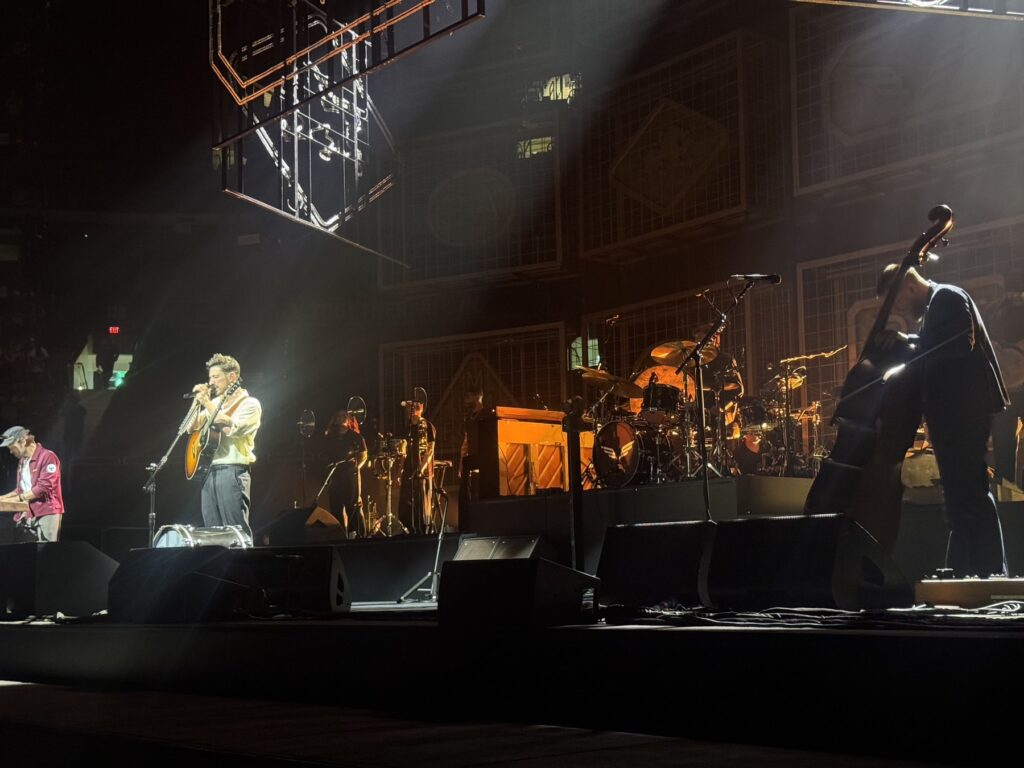
The Band Can Make Us Believe the Singer
There are singers whose conviction is inseparable from the people around them.
A drum part can make panic physical.
A bass line can make restraint feel tense.
A guitar can answer a lyric.
A string arrangement can push sentiment too far or stop just before it does.
The band is not scenery.
If everybody onstage appears to understand what the song is trying to become, the audience can feel it.
You believe the person at the microphone partly because four other people are building the ground beneath them.
Covers Make the Question Even Better
A cover removes one of the easiest assumptions about sincerity.
These are not their words.
So what happens now?
Can somebody make us believe a song written by another person so completely that the issue of ownership almost disappears?
Absolutely.
Sometimes the distance from the original story gives an artist freedom.
Change the tempo.
Alter the pronouns.
Strip the arrangement.
Turn tenderness into threat.
Turn anger into grief.
A cover can reveal that conviction was never dependent on authorship alone.
That is why Made Their Own and Music With Stakes belong beside each other.
Popularity Tells Us Almost Nothing About This
Huge artists can have enormous conviction.
Unknown artists can have none.
The size of the room does not solve the question.
Neither does critical reputation.
There are performances everybody calls iconic that may leave you cold.
There are opening acts with almost no audience who can make you stop talking within thirty seconds.
The only useful thing popularity tells us here is how many people may have had the opportunity to encounter the performance.
The rest is listening.
Context Changes Belief
We do not hear neutrally.
If we know an artist's story, it can change how a lyric lands.
If we know the song is autobiographical, maybe the stakes feel higher.
If we think an artist is manufactured, maybe we listen more skeptically.
If everybody tells us the performance is legendary, maybe we arrive already waiting to be moved.
Those biases are worth admitting.
Sometimes context deepens conviction.
Sometimes it manufactures it.
Sometimes learning too much makes a song smaller.
You Can Believe Them and Still Dislike the Song
This distinction matters.
Conviction is not the same as taste.
An artist can convince me completely and still make music I do not want to return to.
I can admire the performance and dislike the production.
Believe the lyric and hate the chorus.
Respect the risk and think the song fails.
Music With Stakes should not become a backdoor scoring system where conviction automatically equals greatness.
It is one way of listening.
A powerful one.
Not the only one.
We Are Going to Disagree
There will be performances I believe completely that somebody else finds theatrical.
Artists you hear as deeply vulnerable that I hear as mannered.
Moments that destroy one listener and do nothing to another.
Good.
That disagreement is part of the point.
Conviction cannot be reduced to a waveform.
It happens between a performance and a listener.
We can look for signals.
Talk about choices.
Name the moment.
But we cannot declare a final result for everybody.
The recurring question stays beautifully simple:
Do we believe them?
And if the answer is yes:
What made us believe?
Who makes you believe every word — and what is the moment that convinces you?